How to Set up a Leave Policy for Your Company in India
Leave types, the rules worth deciding in advance, approvals and the link to payroll, with a checklist you can use today.
The short answer
A leave policy sets out who it covers, the leave year, each leave type with its days and rules, how to apply, who approves, and what happens to unused leave. Check the minimum entitlements for each state you operate in first. Then decide the rules that need a clear answer (the sandwich rule, half days, comp off expiry, probation and notice period) and write them down, so they are applied the same way to everyone.
What a Leave Policy Should Cover
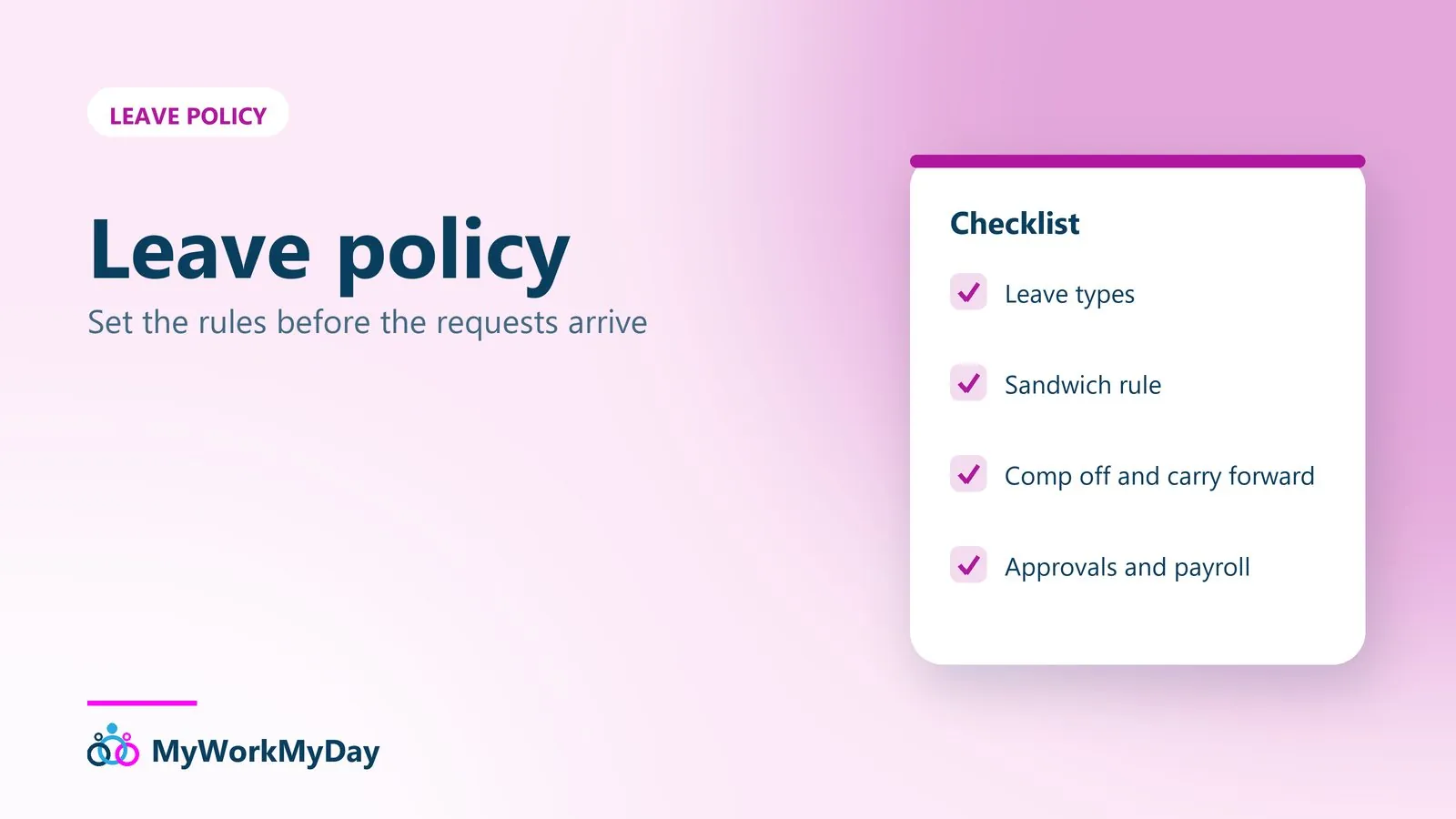
Before you decide numbers, decide scope. A complete policy usually covers:
- Who it applies to: permanent staff, probationers, part-time employees and people serving notice.
- The leave year: calendar year, financial year, or each person's joining anniversary.
- Each leave type: how many days, how it's earned, and whether it can be split into half days.
- How to apply: how far in advance, what proof is needed, and how backdated leave works.
- Approvals: who approves, and what happens if they don't respond.
- Year end and exit: what carries forward, what lapses, and what is paid out.
Common Leave Types
Most Indian companies use some version of the leave types below. The "typical rules" column describes common practice, not legal requirements.
| Leave type | Used for | Typical rules |
|---|---|---|
| Casual leave | Short personal needs | A few days a year, often capped at 2 or 3 in a row, lapses at year end |
| Sick leave | Illness | Medical certificate needed after a set number of days |
| Earned or privilege leave | Planned time off | Builds up over the year, can carry forward up to a cap, may be paid out |
| Compensatory off | Working on a weekly off or holiday | Earned per extra day worked, expires after a set period |
| Leave without pay (LWP) | Absence beyond paid balances | Reduces salary for the days taken |
Many companies add special leave too, such as marriage, bereavement or paternity leave. Keep the list short: every extra type is one more balance for employees to track and for HR to explain.
Rules Worth Deciding in Advance
Each of these needs a written answer before someone applies. Pick one to see what to decide.
The Sandwich Rule
If someone takes Friday and Monday off, does the weekend in between count as leave? Under a sandwich rule, it does. That's 4 days of leave, not 2 (see how the sandwich rule works). Some companies apply it to holidays as well. Either choice is fine. What causes disputes is a rule that isn't written down, or one that managers apply differently.
Half Days
Say which leave types allow half days, and whether a half day is "first half" or "second half". This matters if someone works half a day and then leaves early: is that a half day of leave or a short-hours case for attendance?
Compensatory Off
Decide who can earn comp off, whether it needs manager approval, and how long it stays valid. Setting an expiry, for example 30, 60 or 90 days, stops balances from piling up.
Probation and Notice Period
New joiners often accrue leave but can only use some of it during probation. People serving notice are often asked not to take leave, or need extra approval. Write both rules down so they aren't decided case by case.
Backdated Leave and Minimum Gaps
Set a limit on how far back someone can apply, for example within the same pay period. Some companies also set a minimum gap between two leave requests, to stop leave being stretched around weekends.
Example
Priya applies for Friday and Monday. With a sandwich rule that counts weekly offs, her request uses 4 days of leave. Without it, it uses 2. Neither is wrong, but the policy should say which applies before she applies, not after.
Approvals and Balances
For most teams, one approval from the reporting manager is enough. Add a second level, such as HR or a department head, only for long or unusual leave. Also decide what happens when the approver is away: auto-approval after a few days, or escalation to their manager.
Employees should be able to see their balance before they apply. When balances are visible in self-service, people don't need to ask HR how many days they have left.
How Leave Reaches Payroll
Leave without pay is the point where leave affects salary. Before each payroll run, every pending leave request should be approved or rejected, and every unpaid day confirmed. If that step is skipped, salaries are paid on incomplete data and corrected the following month.
Pro tip
Put the payroll cut-off in the leave policy itself, for example "leave must be approved by the 25th to count in this month's salary". It gives managers a deadline and stops late approvals turning into salary corrections.
In MyWorkMyDay leave management, each rule above is a setting. Leave types sit in categories (regular, incident, comp off and unpaid). Leave plans hold the yearly limits, probation and monthly restrictions, half-day options, and whether weekly offs and holidays count, which is how the sandwich rule is applied. Before a run, the payroll dashboard lists pending leave and unpaid leave so they can be cleared first.
Leave Policy Checklist
- Minimum entitlements checked for every state you operate in
- Leave year defined (calendar, financial or joining date)
- Each leave type: days, accrual, half-day rule, proof needed
- Sandwich rule decided and written down
- Comp off: who earns it, approval, expiry
- Rules for probation and notice period
- Approval levels and what happens when an approver is away
- Carry-forward cap, lapse and encashment, including on exit
- Payroll cut-off: when leave must be approved for that month's salary
Every item on this list has a section in our free leave policy template, an editable Word file you can fill in and share.
Frequently Asked Questions
Is the sandwich rule legal in India?
The sandwich rule is a company policy choice rather than a legal requirement. Many companies use it, but it should be written into the leave policy, applied the same way to everyone, and checked against the leave rules that apply in your state.
How many days of leave must an employer give in India?
Minimum leave depends on where and how you operate. Shops and offices follow their state's Shops and Establishments rules, and factories follow the labour law that applies to them. Check the rules for every state you have staff in, then set your policy at or above those minimums.
Should unused leave be carried forward or paid out?
Both are common. Many companies allow earned leave to carry forward up to a cap and pay out (encash) the rest at year end or on exit, while casual and sick leave lapse. Whatever you choose, state the cap and the rule for leaving employees clearly.
Further reading
Put your leave policy into practice
See how leave types, leave plans and approvals work in MyWorkMyDay, using your own rules.