
Full and Final Settlement in India: What to Pay, When, and How
The components of a full and final settlement, the two-working-day rule for wages, how gratuity and leave encashment are taxed, and a step-by-step checklist.
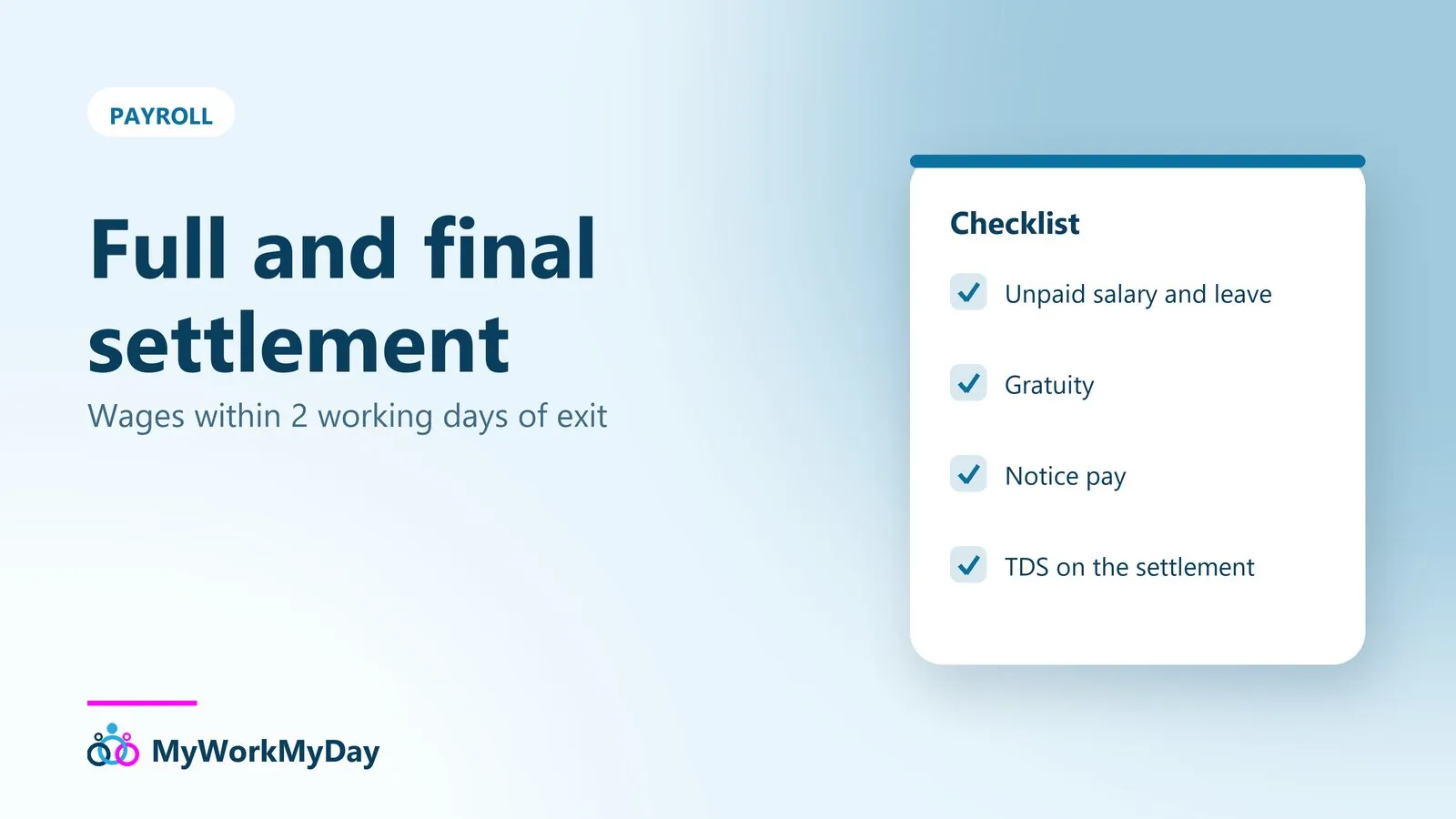
The short answer
A full and final settlement is the last payment to an employee who leaves: unpaid salary, leave encashment, any bonus due and, where eligible, gratuity, minus recoveries such as unserved notice. Under section 17(2) of the Code on Wages, wages must be paid within two working days of the employee leaving; other parts such as gratuity have their own timelines. Settle quickly, show every line on a statement, and issue the tax documents that follow.
What a Full and Final Settlement Includes
| Component | Paid or recovered | Notes |
|---|---|---|
| Salary for days worked | Paid | Up to the last working day |
| Leave encashment | Paid | Unused leave, as your policy allows |
| Bonus or incentives due | Paid | As per policy or the bonus law that applies |
| Gratuity | Paid | If eligible; see below |
| Reimbursements | Paid | Approved claims not yet paid |
| Notice pay shortfall | Recovered | If notice was not served, as per the contract |
| Advances and loans | Recovered | Outstanding balances |
The Two-Working-Day Rule
Section 17(2) of the Code on Wages, 2019 says that when an employee is removed, dismissed or retrenched, resigns, or becomes unemployed because the establishment closes, the wages payable must be paid within two working days.
In practice, a two-day deadline means the settlement has to be mostly ready before the last working day: pending leave approved, attendance closed, and recoveries agreed.
Gratuity on Exit
Gratuity is 15 days of wages for each completed year of service, worked out as last drawn wages × 15 ÷ 26 × years, with a part year of more than six months counted as a full year. Permanent employees usually qualify after five years of continuous service. Under the Code on Social Security, fixed-term employees qualify after one year.
Gratuity up to ₹20 lakh is tax-free for non-government employees. Use our gratuity calculator to work out the amount.
Leave Encashment on Exit
Unused leave is paid out as your policy allows. For non-government employees, leave encashment on retirement or resignation is tax-free up to a lifetime limit of ₹25 lakh, subject to the other limits in the formula. Any exemption already claimed with a previous employer reduces what is left. Our leave encashment calculator shows the amount and the exempt part.
Tax Documents After Exit
TDS on the settlement is deducted in the month it is paid and reported in the quarterly salary TDS return. From FY 2026-27, under the Income-tax Act, 2025, the salary TDS return is Form 138 (it replaced Form 24Q) and the annual salary TDS certificate is Form 130 (it replaced Form 16). Confirm the forms and due dates on the Income Tax Department's portal.
Full and Final Settlement Checklist
- Resignation accepted and last working day confirmed
- All pending leave and attendance corrections approved
- Notice period served or shortfall agreed
- Assets returned and recoveries listed
- Leave encashment and gratuity worked out
- Settlement statement shared with every line shown
- Wages paid within two working days of exit
- TDS deducted and the tax certificate issued on time
- Relieving and experience letters issued
Frequently Asked Questions
How many days does an employer have to pay full and final settlement?
Under section 17(2) of the Code on Wages, wages must be paid within two working days of the employee leaving. Other components such as gratuity have their own timelines. Check your state's rules for details.
Is gratuity part of full and final settlement?
Yes, if the employee is eligible: usually after five years of continuous service, or one year for fixed-term employees under the Code on Social Security.
Is leave encashment taxable on resignation?
For non-government employees, leave encashment on retirement or resignation is tax-free up to a lifetime limit of ₹25 lakh, subject to the other limits in the formula. Leave encashed while still employed is taxable.
Can an employer recover notice pay in the full and final settlement?
If the employee did not serve the notice period agreed in their contract, the shortfall is usually recovered in the settlement, as the contract allows.
Further reading
Run exits from resignation to settlement
See how resignations, approvals and full and final settlement work in MyWorkMyDay.
More Guides
Buying guide
How to Choose the Best HRMS Software in India: A Buyer's Checklist
What to check before you sign: Indian payroll rules, attendance and shifts, pricing, setup, and the questions that separate a good demo from a good product.
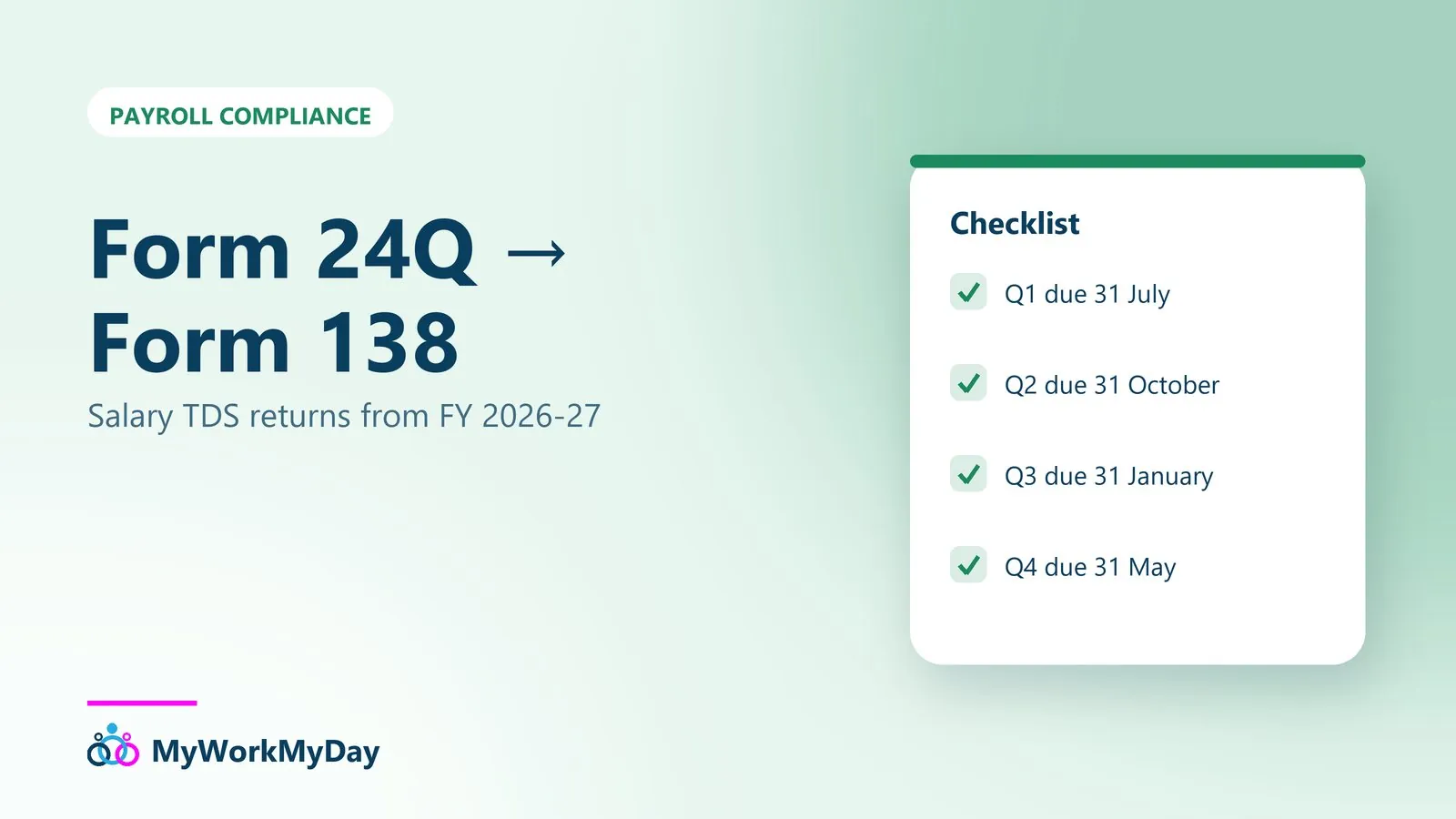
Payroll compliance
Form 24Q Is Now Form 138: Salary TDS Returns From FY 2026-27
What changed under the Income-tax Act, 2025, the new form numbers, quarterly due dates, and what stays on the old forms during the transition.